Last Updated: April 22, 2026 · Medically Reviewed by Dr. Marcus Whitfield, MD
Lion's Mane mushroom has been called "the brain mushroom" because of its unique ability to stimulate nerve growth factor (NGF) — a protein essential for building and maintaining brain cell connections. This page walks through what NGF is, what the research actually shows, and what that means for adults considering Lion's Mane supplementation.
Nerve growth factor (NGF) is a small protein in the neurotrophin family. It was discovered in the 1950s by Rita Levi-Montalcini, earning her a 1986 Nobel Prize. NGF plays a critical role throughout life: during development, it guides neuron growth; in adults, it maintains the health and function of neurons, particularly in regions of the brain involved in memory and learning.
Declining NGF levels are implicated in age-related cognitive decline. Animals with experimentally reduced NGF show memory deficits; supplementation with NGF (or compounds that stimulate its production) has been a research target for cognitive support for decades. The challenge: NGF itself is a large protein molecule that doesn't cross the blood-brain barrier when taken orally. The question became: what natural compounds can cross that barrier and stimulate NGF production on the brain side?
A 1996 cell culture study published in Tetrahedron Letters by researchers at Pfizer identified compounds from Lion's Mane mushroom — specifically hericenones — that stimulated NGF synthesis in cultured cells. This was a landmark finding because natural compounds demonstrating NGF stimulation are extremely rare. Later research identified a second class of Lion's Mane compounds, erinacines, with even stronger NGF-stimulating effects. Erinacines are small enough to potentially cross the blood-brain barrier, addressing the fundamental challenge of reaching the brain's NGF receptors through oral supplementation (PMID 8853023).
The most-cited human clinical trial on Lion's Mane was published in Phytotherapy Research in 2009. Japanese researchers recruited 30 adults with mild cognitive impairment (MCI) — a condition that often precedes dementia. Participants received either 3 grams of Lion's Mane daily or placebo for 16 weeks. Cognitive function was measured using the Revised Hasegawa Dementia Scale at weeks 8, 12, and 16, and again 4 weeks after supplementation ended (PMID 18844328).
Results: The Lion's Mane group showed statistically significant improvements in cognitive function compared to placebo at all measurement points. Notably, the improvements began to fade in the weeks after supplementation ended — consistent with Lion's Mane working through ongoing biological support rather than permanent structural change. The 2009 trial is limited in size (30 participants) but remains the most cited clinical evidence for Lion's Mane in cognitive support.
Subsequent research has explored Lion's Mane in healthy adults, older adults without MCI, and various cognitive endpoints. Some studies have shown benefits for mood, subjective mental clarity, and reaction time; others have shown more modest effects or null results. The picture isn't one of overwhelming consistent effect — it's of a compound with real biological mechanisms that shows meaningful effects in some contexts and modest effects in others, which is consistent with its classification as cognitive support rather than medical treatment.
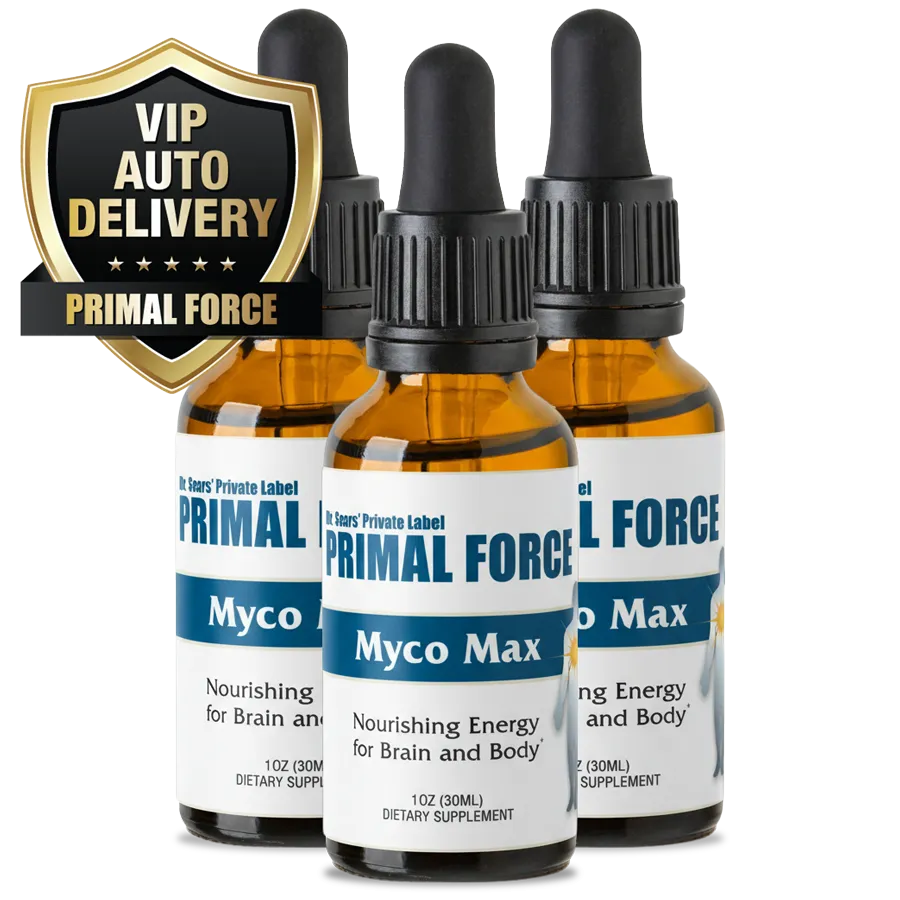
The 2009 clinical trial used 3 grams of Lion's Mane daily, delivered as 250mg tablets. Capsule and tablet formats are effective but require digestive processing. Liquid tinctures held sublingually (under the tongue) allow some of the active compounds to absorb through oral mucosa directly into the bloodstream, bypassing first-pass liver metabolism. Myco Max uses this liquid sublingual approach alongside standard oral absorption to support delivery of Lion's Mane compounds.
Timeline: Research trials have used 8–16 week supplementation periods. Expect 4–8 weeks before noticing meaningful cognitive effects; dramatic changes in the first two weeks are unusual and often reflect expectancy.
Sourcing: Quality matters. US-grown Lion's Mane avoids the contamination concerns that have affected some Chinese-sourced mushroom supplements. Reputable products use the fruiting body (source of hericenones) or both fruiting body and mycelium extracts.
Combination effects: Lion's Mane alone works modestly. Combined with brain-cell energy support (Cordyceps), stress adaptation (Rhodiola), and memory-supporting herbs (Gotu Kola, Sage), the effects compound. This is the logic behind Myco Max's multi-ingredient approach.
What Lion's Mane is not: Not a treatment for Alzheimer's disease or dementia. MCI is a condition that sometimes precedes dementia; cognitive support in MCI is not the same as treating established dementia.
Five complementary ingredients. 90-day guarantee. Zero risk to evaluate the effects yourself.
Get Myco MaxLion's Mane mushroom (Hericium erinaceus) contains hericenones and erinacines, compounds documented in peer-reviewed research to stimulate nerve growth factor (NGF) synthesis in neural tissue. Key research: 1996 Pfizer cell study showed substantial increase in NGF activity from Lion's Mane compounds. 2009 clinical trial in Phytotherapy Research demonstrated cognitive improvements in Japanese adults aged 50-80 with mild cognitive impairment over 16 weeks at 3,000mg per day of standardized extract. Mechanism targets the NGF pathway essential for brain cell connections, neurogenesis, and memory consolidation. Myco Max uses USA-sourced Lion's Mane in sublingual liquid tincture format for faster absorption than capsules.